

On changing the constellations (but only a little bit)
We are the curators of star lore that deserves to be remembered, but there are reasons to tweak the constellations for new generations
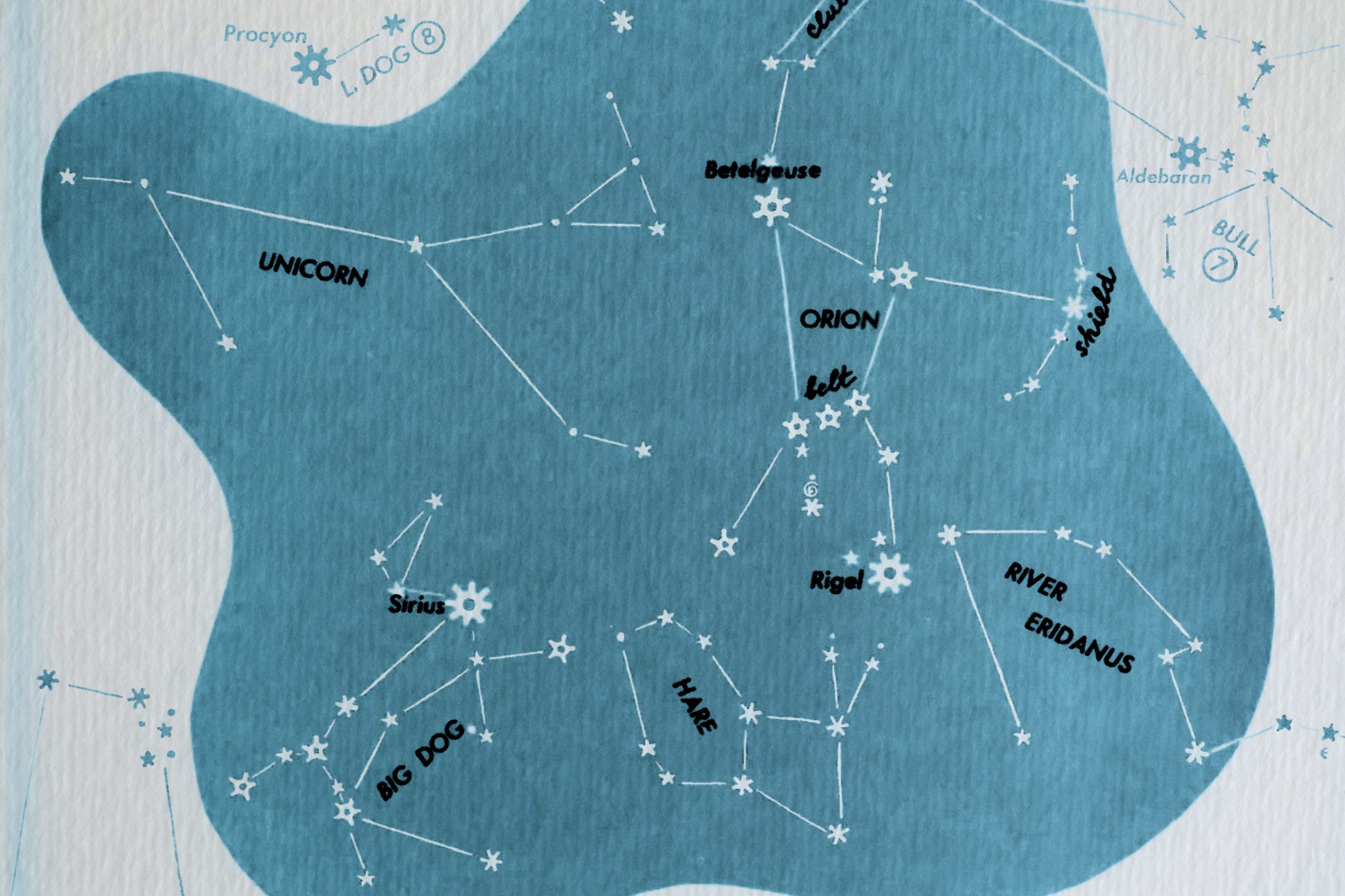
Why is it that, in the age of the James Webb Space Telescope and other observatories on the bleeding edge of astrophysics, we still find ourselves unable to let go of the constellations? For a century they’ve been formalised by astronomers to rigorously compartmentalise the sky with international agreement. Yet their varying sizes and boundaries are merely arbitrary, and with our precise celestial coordinate system, we could simply discard them. We could, If we wanted to. Instead, we hold onto them, not out of an academic need but rather a sentimental one. They are a part of who we are.
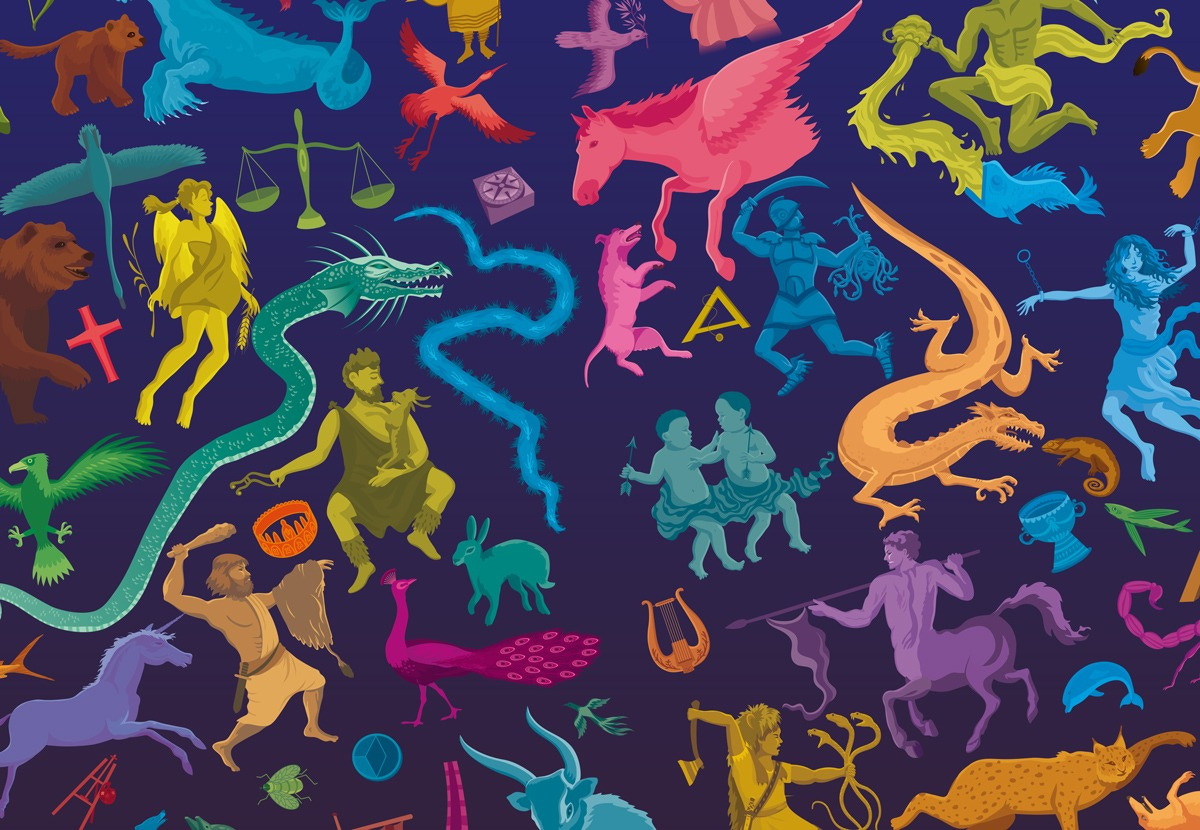
Across the ages, the night sky has engendered inspiration. Our ancestors filled it with stories, and translated its incorporeal quality through millennia of poetry, visual arts and music. Debussy made moonlight sing, Van Gogh made starlight dance, and on countless unrecorded occasions, lonely pilgrims and seafarers conversed with the tapestry of heroes and creatures gazing back down at them – old and familiar friends, introduced to them by their elders. Once drenched in mythology, now scrutinised with technology, the night sky has lost some of its mystery but none of its magic, as storytelling remains deeply embedded at the heart of astronomy. Today we tell scientific stories about the earliest moments of cosmic history, of black holes and alien worlds. Our new stories are grand and yet also intimate, connecting our lives directly to the extraordinary lives of stars through the very atoms we are made of. Still, the constellations continue to enchant novice stargazers and make the night sky effortlessly memorable. Their mythological tales employ themes and humour that are less relevant to us today, but the characters are no less fascinating.
Like so many astronomers who grew up during the age of physical books, I have my own childhood copy of H. A. Rey’s beautiful title The Stars: A New Way to See Them. First published all the way back in 1952, it is as far as I know the only book in print to boast a cover endorsement by Albert Einstein. The collision of Rey’s love for stargazing and his inimitable talent for creative illustration (most widely seen in the Curious George series) resulted in something truly special—a timeless classic at once both charmingly traditional and subtly progressive.
“Many thanks for your lucid and stimulating book. I hope it will find the interest it deserves.”
— Albert Einstein, letter to H. A. Rey, 30 September 1953
The Stars is beloved among stargazers around the world for popularising then new and still more accessible interpretations of the ancient patterns that adorn the sky. Rey took it upon himself to redraw the well-established imaginary lines that join the dots, creating new pictures of the same heroes, animals and objects. In some cases, he re-posed them, assigning different stars to their heads or limbs, but he was careful to avoid altering their sizes or degree of overlap. He respected the agreed parameters of the eighty-eight constellations (selected from a collection catasterised over millennia) by the International Astronomical Union in 1928.
Until that year, a surprisingly large list of changes were proposed by various astronomers hoping to make their mark on western star lore. Famously, Edmund Halley (who worked at the Royal Observatory nearly three centuries before I did) once introduced a pattern to commemorate the restoration of the English monarchy by Charles II. Taking the form of an oak tree (the ‘Royal Oak’ Charles supposedly used as a hiding place to escape capture, and after which so many pubs take their name) the now obsolete Robur Carolinum was subsumed into the large collection of stars assigned to Jason’s ship, Argo.
Most such attempts to squeeze new characters into a crowded sky have perhaps proved too substantial to be palatable, and it would be hard to improve on Rey’s effort to refine the way we see them geometrically, but I believe there is room to expand on what they can tell us. Those distant ancestors who breathed life into the stars weren’t entirely different from us, but they did inhabit and world with different values, and their star stories occasionally remind us of this. Take Cygnus the Swan, for example, who the Greeks most commonly associated with Zeus. In one legend, he adopts the form of an elegant bird to engage the princess Leda in an extramarital affair. Granted, in another less salacious tale, the swan represents Orpheus, slain at the hands of violent zealots and immortalised next to his harp (Lyra.) But like so many stories from the era, it too fails to resonate with today’s newcomers. Perhaps that is why Rey sought to pass over it, preserving his word count for more apposite myths.
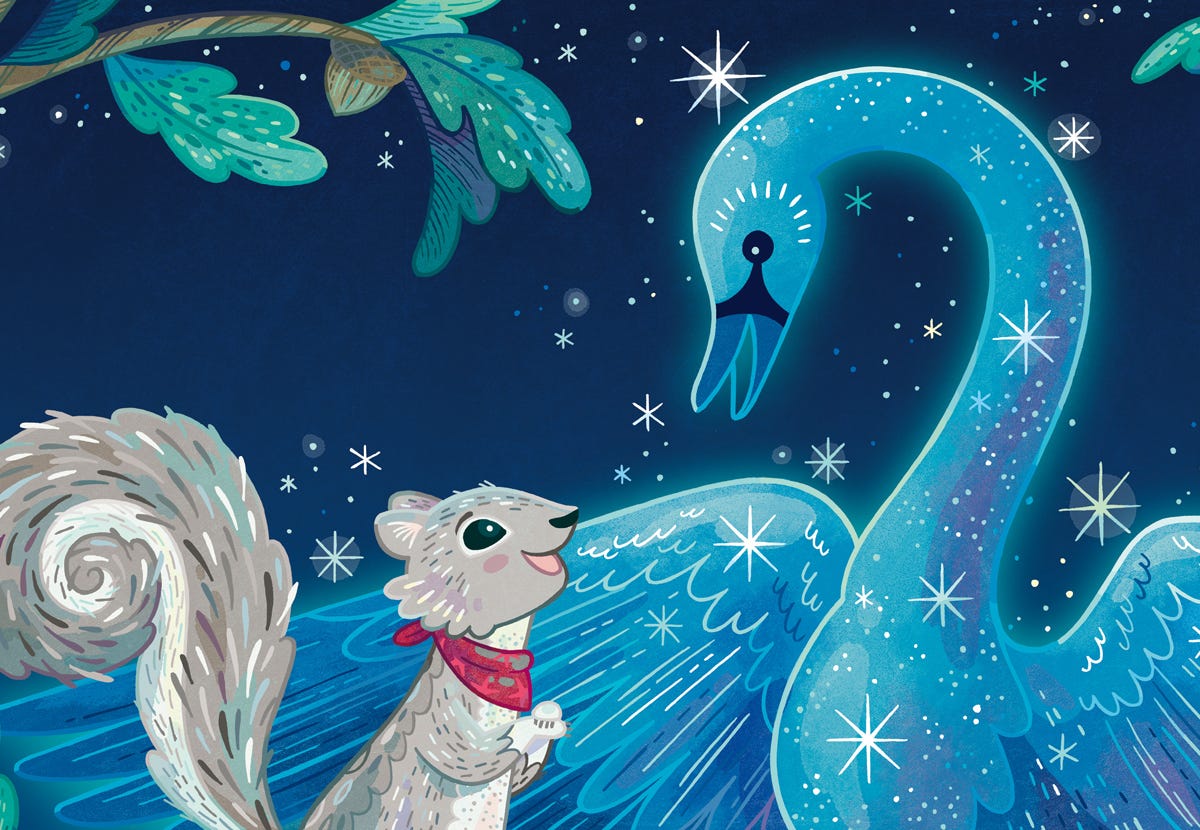
Throughout my career, I’ve had the pleasure of introducing the constellations to curious youngsters, whose imaginations are well prepared to bring them to life. I’ve also imagined and even dreamed about ways to modernise them, to reflect the ongoing stories we tell about the Universe—both scientific and personal. With this goal in mind, I’ve been quietly publishing my own star lore in a series of rhyming picture books for young children. The short stories, beautifully illustrated by Anni Betts, introduce various creatures among the constellations who take on new roles as educators.
In book one, Cygnus the Swan is no longer a nonsensical disguise for the concupiscent Zeus, but rather a brilliant astrophysicist. She delights in answering the questions of an inquisitive Greenwich Park squirrel who longs to understand the stars. Book two introduces Ursa Major and Ursa Minor, renamed Carl and Ursula (can you decipher these names?) and our squirrel discovers the underrated magic of navigating with the night sky.
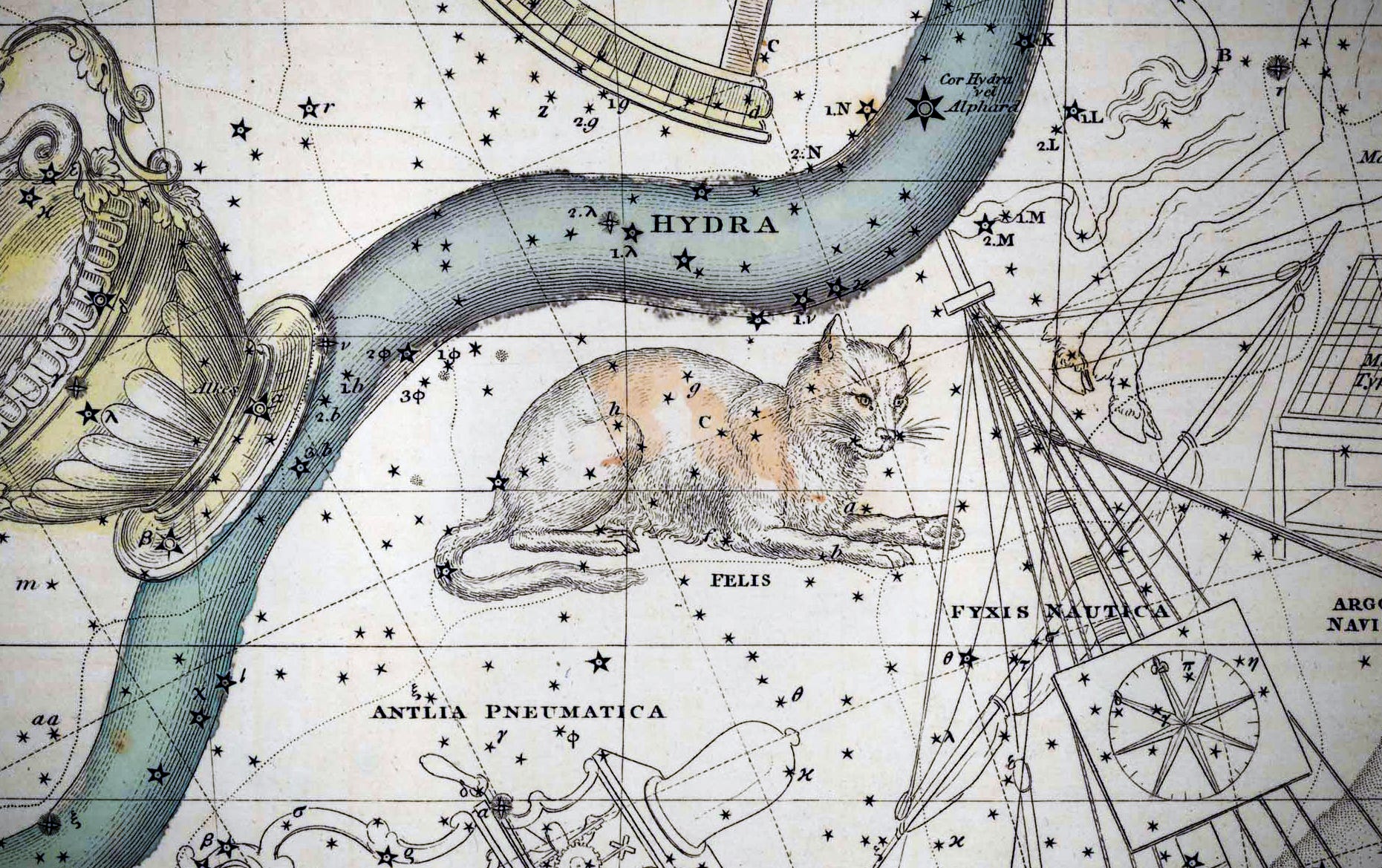
Animals are inherently compelling. Indeed, our distant ancestors felt the urge to immortalise them on the celestial canvas (not forgetting Lalande’s commendable effort to add his cat.) This is arguably truest for children, so I believe that a vibrant array of familiar and strange creatures provides a perfect entry point for budding astronomers.
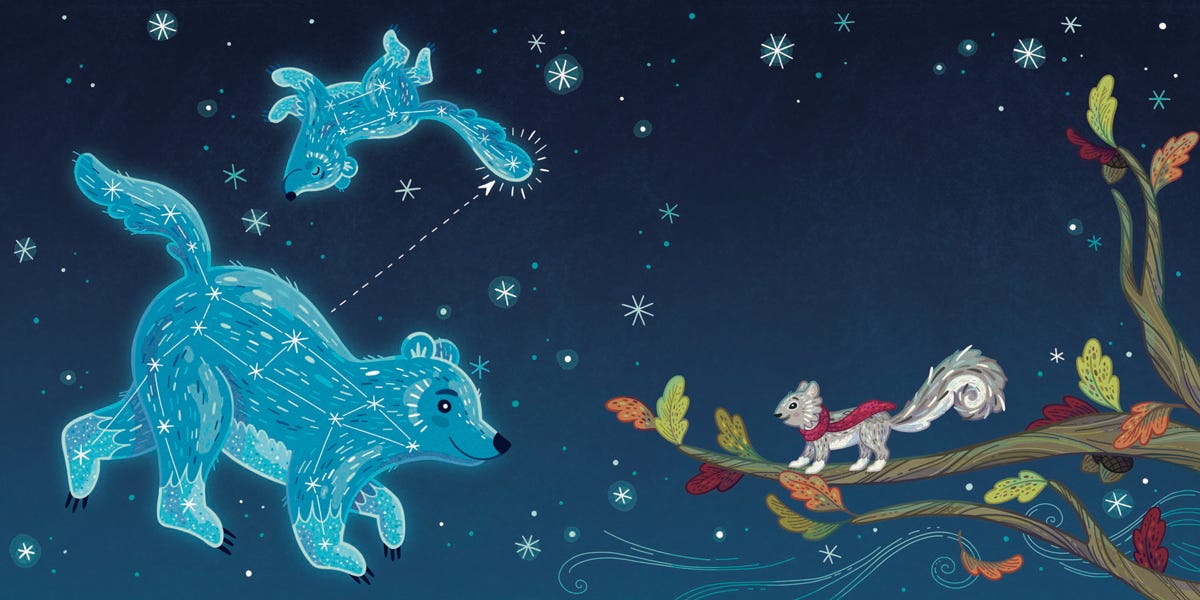
Ultimately, these stories are about the importance of curiosity, patient teachers, and contemplation of the natural world. One can develop a lifelong passion for astronomy without necessarily pursuing it academically—I would argue that everyone should, regardless their occupation. The sky’s canon need not be overwritten; there is room enough for small, alternative editions that celebrate nature itself, and the animals that have held such long appeal are already there in number and diversity. Thus, in the spirit of H. A. Rey, my re-invention invites accessibility but I keep the images intact. After all, we inherited them from the stargazers of the past and it is only fitting that we leave them for the stargazers of the future.
Let's create new ones
Many lifelong interests begin in childhood and your books are a great way to inform and entertain the youngest of minds!